
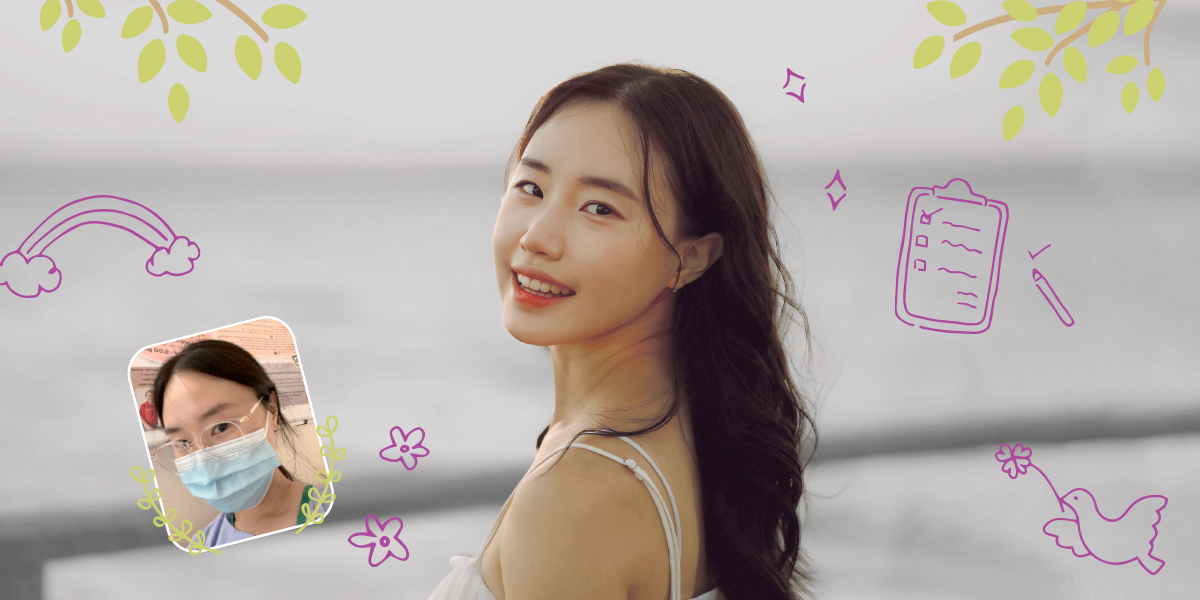
Q. Could you please introduce yourself? Hello! I’ve been in Australia for about two and a half years. Back in Korea, I majored in nursing and worked as a professional nurse. Currently, I’m working as a nurse in Australia while simultaneously balancing several other ventures. My days are incredibly busy, but I’m living them with high intensity, believing that every moment is an opportunity to learn and grow.
Q. What brought you to Australia? Becoming a nurse had been my dream since I was in middle school, and I actually achieved that goal. However, I felt that spending my entire 20s solely within the confines of one profession was a missed opportunity. I wanted to experience a wider variety of things—from being a barista or an all-rounder to exploring new fields like entrepreneurship. I realized that to tap into global business opportunities, I needed English. I came to Australia to improve my language skills and experience a much broader world.
Q. How did your career in Australia begin? Before starting as a nurse here, I wanted to challenge myself in different fields. I started as a barista and an all-rounder, working two jobs in regional Queensland. Since my goal of becoming an overseas nurse was always clear, I spent about three months preparing for the PTE exam while working to convert my Korean nursing license to an Australian one. During that process, I applied to a facility in Townsville where I was living and began working as a Registered Nurse (RN) in aged care. Later, I moved to Brisbane and spent about a year working at a public hospital, gaining solid experience in the Australian healthcare system. It was quite a rare case to work in a public hospital on a Working Holiday visa, so even the hospital staff were surprised.
Q. What are the differences between nursing in Korea and Australia? In Korea, one nurse is often responsible for more than 14 patients, and the system relies heavily on guardians or private caregivers being present. Nurses also handle a lot of medication explanations and administrative tasks. Most importantly, breaks are rarely guaranteed; it was often difficult even to go to the bathroom or have a proper meal. In contrast, a nurse in Australia looks after four to five patients, and break times and meal hours are strictly respected. Routine care, such as helping patients shower or eat, is part of the nurse’s role, and the overall environment is much more relaxed and flexible. In Korea, I once had to work while on an IV drip because I was so sick, but in Australia, there is a strong culture of being considerate regarding leave and sick days. Through this, I’ve truly experienced the importance of work-life balance.
Q. How did you overcome the language barrier? I tried many methods, but the most effective one was “immediate application.” When I was working in Townsville, I made it a point to use the English sentences I learned that day in my actual work the very next morning. When I was studying for the PTE, I studied from 5 AM to 11 PM every single day. I repeated my studies until I had almost memorized an entire English book, and I practiced speaking with ChatGPT during my commute. Using what I learned in real-life situations immediately was the biggest help. I still maintain these study habits today.
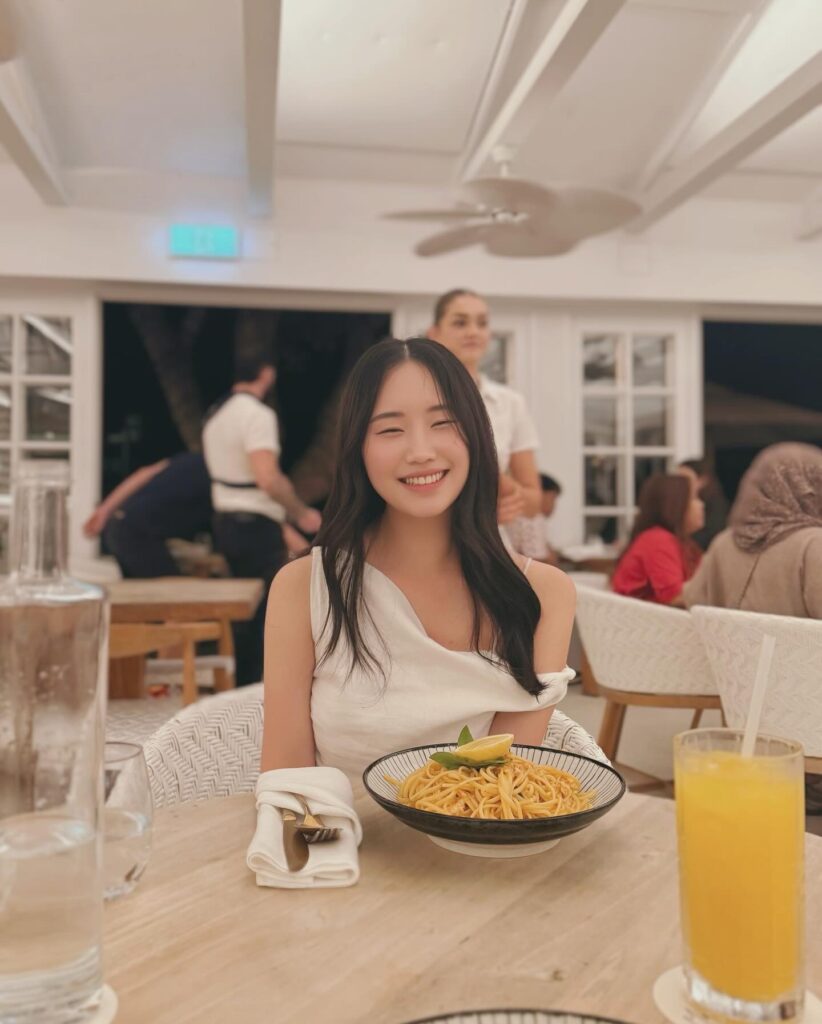
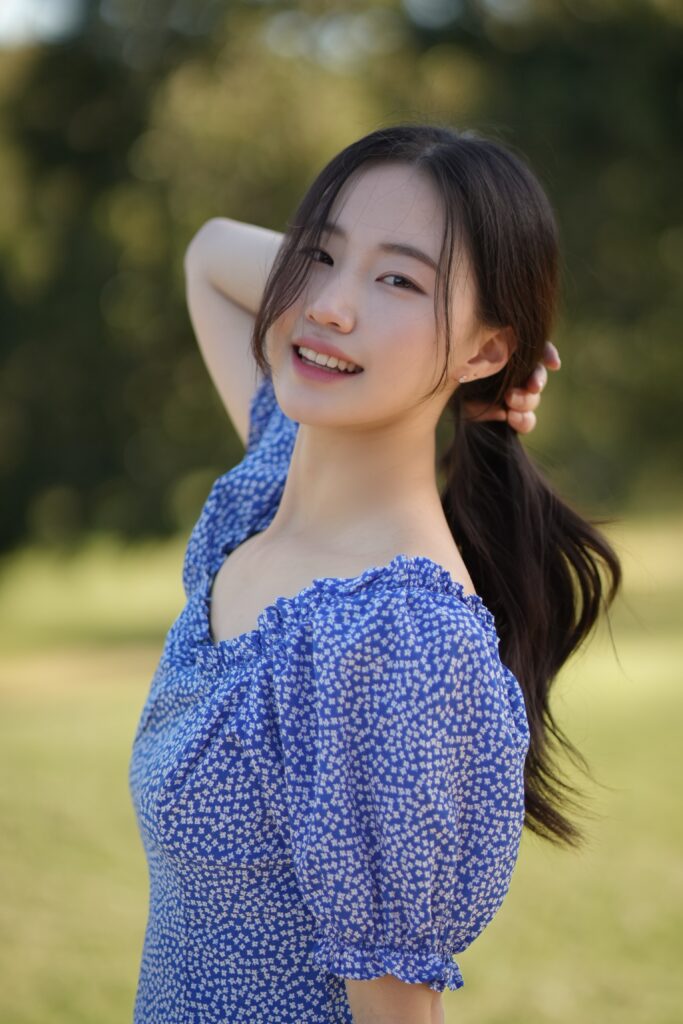
Q. We heard you’ve done various jobs besides nursing. Yes, I prefer to expand my horizons rather than focusing on just one thing. In Australia, I’ve worked on farms, as a barista, and as an all-rounder. Then I worked in a public hospital as a nurse. I’ve also modeled for photography, and currently, I’m running a startup where I personally plan and develop a digital business card platform. In Korea, I also give lectures at my alma mater and participate in my professor’s projects. By taking on these diverse roles, I’m constantly expanding the boundaries of what I can achieve.

Q. What inspired you to start your startup? While I dreamed of nursing for a long time, I’ve also wanted to do something for the environment since I was young. I developed a digital business card platform to solve the inefficiency of paper cards, where nine out of ten cards are thrown away within a week. Digital cards allow for free information updates and can be used for a lifetime. They also have clear commercial advantages, such as a 35% higher follow-up rate and a 16% increase in lead generation. While it’s a small step for the environment, I am confident it will have a significant impact as positive perceptions of digitalization spread. While preparing for the business, I visited Silicon Valley to network with entrepreneurs and investors to understand global market trends. Seeing how quickly the U.S. embraced AI and swapped QR codes instead of paper cards gave me great confidence in my digital-based business direction. It was an experience that confirmed this service, combining technology and the environment, could become the new standard for business networking.
Q. How did you handle networking? I actively participated in various business meetups. At gatherings of founders, developers, and investors, I introduced myself and was honest about what kind of help I needed. It was awkward and overwhelming at first, but when I approached people without being shy and asked for help, more opportunities opened up. Even when I was in Korea, I traveled as far as Jeju Island to meet developers in person.
Q. What have you learned while running a startup? In the past, it was difficult to take on new challenges due to a lack of information. Now, thanks to the advancement of AI and various knowledge-sharing platforms, the environment is such that anyone can easily start. I am utilizing AI heavily to prepare my business, and I feel that we are in an era where even non-specialists can successfully take on the challenge.
Q. Have you had any experiences with failure? I once led a project with international team members to develop a travel web app for digital nomads. We wanted to create a service that provided flights, cafes, exchange rates, and restaurant info all in one place. I was so passionate that I would wake up at 4 AM to focus on planning. However, due to differences in pace and direction among team members, the project was eventually suspended after six months. This experience taught me the absolute importance of having a shared goal among team members in a startup.
Q. What are your future goals? For the next three years, I want to focus on my environmental business, including digital business cards, and developing AI-based services. Specifically, I want to maximize efficiency by applying AI automation to marketing and repetitive tasks. Since nursing is a professional career I can return to at any time, I plan to focus primarily on my business while working as a nurse when necessary. For now, I want to give my all to my business, and even if I fail, I want to use that experience as a stepping stone for growth.
Q. Any words for those considering a Working Holiday in Australia? I believe your 20s is a time when it’s perfectly okay to fail. Many people might not know what they are good at yet, and Australia is a great environment to experience various opportunities. Learning English is important, but what’s even more important is experiencing things firsthand. Having an attitude of enjoying the challenge itself is more important than fearing failure.
Q. Any final thoughts? I felt that the culture abroad strongly supports the act of taking a challenge itself. Even if you fail, it’s important to learn from the experience rather than getting too frustrated. I’m continuing to challenge myself without hiding my mistakes. I want to continue creating my own path through a wide range of experiences.

