
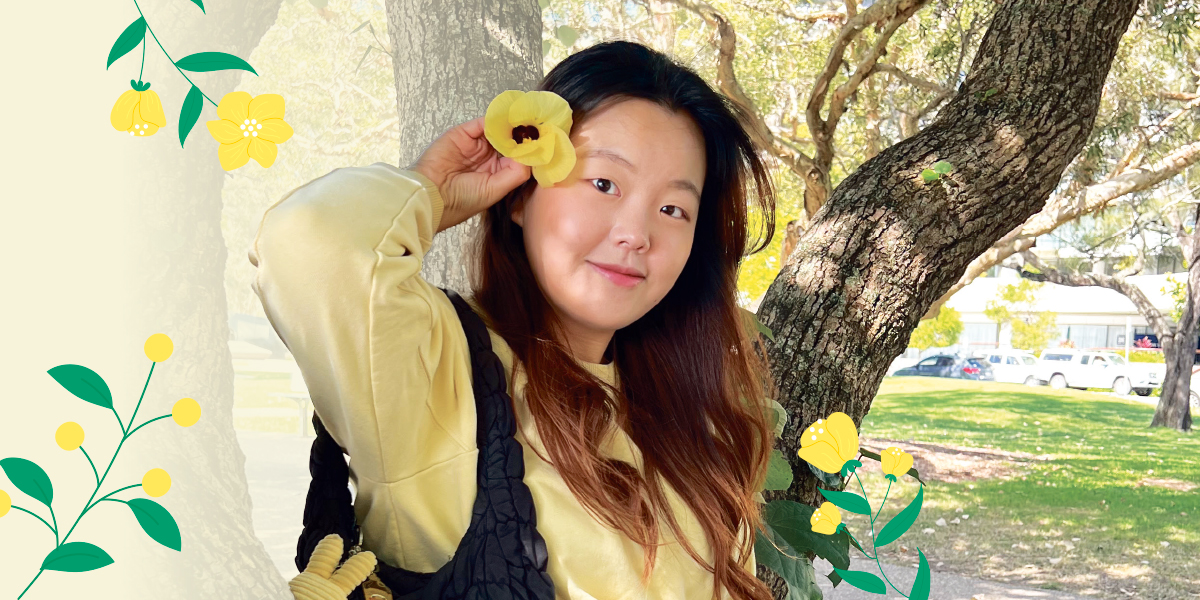
The Best Time to Start Is When You Think It’s Too Late
Q. Please briefly introduce yourself.
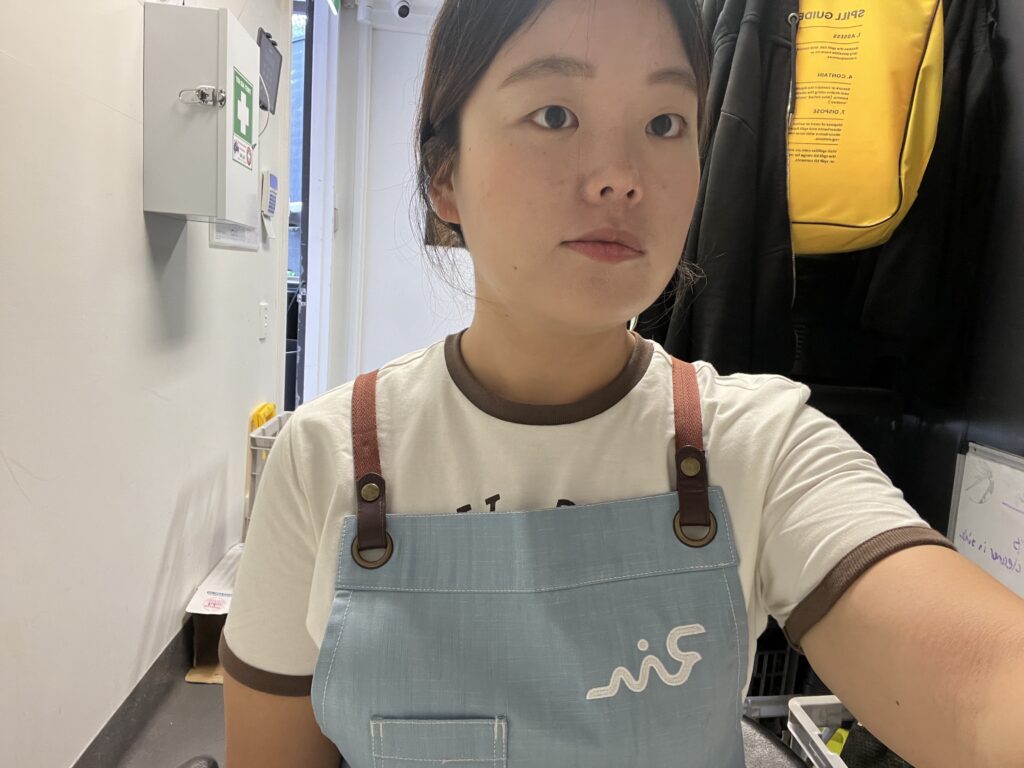
Hello, my name is Jungbin Jin. I’m 28 years old and currently working at a café in Australia. My major was electronic engineering, but now I’m on a completely different career path.
Q. Were you always interested in living overseas?
Yes. Before coming to Australia, I traveled solo around Europe for about 40 days, and it was honestly one of the best experiences of my life. Even though I was alone, I never felt lonely. I loved experiencing different cultures firsthand and having small talk in English with people I had never met before.
After that trip, I kept thinking, “Someday I really want to live abroad.” But then COVID happened, and both travel and overseas life suddenly became impossible. It was postponed for a while, but eventually I decided to pursue the overseas life I had always dreamed about.
Q. You majored in electronic engineering. Was choosing your career path difficult?
Yes, it was. I wasn’t sure if electronic engineering was really the right fit for me, and I felt quite anxious while preparing for employment. I liked math, but I kept wondering, “Is this really the right path for me?”
Eventually I decided, “Why not try something I actually want to do?” So I shifted toward marketing and content, which had always interested me. I’m also interested in the entertainment industry, and I worked as an intern and contract staff related to CJ, helping manage a YouTube channel.
Q. What kind of work did you do specifically?
I started with activities as a TVING supporter and later worked managing a YouTube channel. I created video titles, reviewed content, and analyzed channel performance.
I looked at things like which age groups responded to certain content, whether traffic came from feeds or recommended videos, and other analytics. I also spent time browsing different online communities to follow trends.
I worked in that role for about a year and three months, and honestly, the work itself was really enjoyable.
Q. What made you choose Australia afterward?
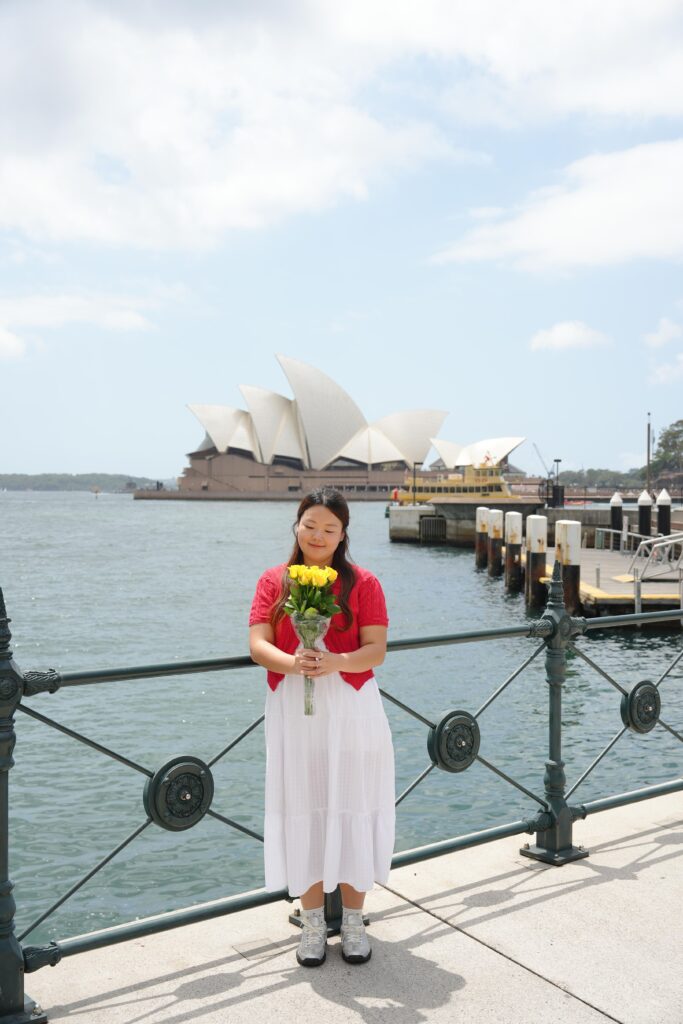
After leaving the company, my long-standing desire to experience life abroad grew stronger again. People around me were quite worried.
They said things like, “You’re getting older,” or “What if your career gets interrupted?”
But for me, it felt like the opposite—I thought, “I should go before it’s too late.” I also enjoyed studying English and watching American shows on Netflix. I had tried some online English conversation classes too, so although my English wasn’t perfect, my fear of speaking it had mostly disappeared.
Q. What was the hardest part after arriving in Australia?
At first, finding a job was the hardest. I applied to many cafés and went through a lot of trials. There were times when I worked for two days and never heard back again. I even cried on the way home once.
I realized that while casual jobs pay well, they can also let you go very easily. At first I thought it felt a bit cold, but I’m slowly getting used to the Australian work culture.
Q. Did you have café experience in Korea?
Yes, I worked in cafés in Korea for about five years. Before starting work in Australia, I even practiced latte art. But once I actually got to the workplace, my English didn’t come out easily and my latte art didn’t go well because I was nervous.
It took me more than a month to fully adapt.
Q. What was the most difficult moment while working?
Taking orders turned out to be harder than I expected. Customers often ask to remove or change specific ingredients.
For example, a customer once said “hard egg,” but I misheard it as “hot egg” and served a soft-boiled egg instead. The customer actually had an allergy to undercooked eggs, so it could have been a very dangerous situation.
After that, I studied expressions like “well-done egg” and “hard-boiled egg,” and I memorized ingredients one by one. There are also many requests such as celiac, gluten-free, and nut-free options, so the first couple of months were stressful almost every day.
Q. Do you have any tips for people who want to get a café job in Australia?
Also, many people think working holidays in Australia are easy, but in reality, they are definitely not.
Q. What do you think is the biggest advantage of living in Australia?
Freedom.
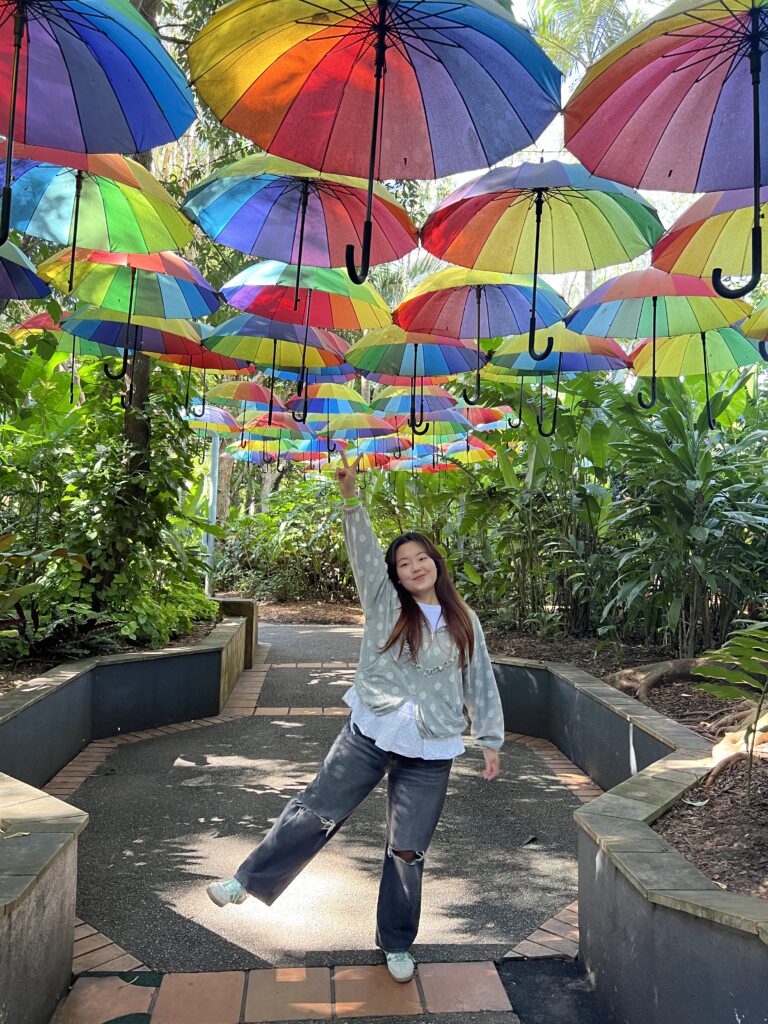
You don’t have to worry about what others think. People are diverse in terms of clothing, hair color, race, and personality, so it feels like you can just live as yourself.
Working in a café naturally makes you a morning person, and after work you can relax in a park or exercise. The work-life balance is really good.
In Korea I was always busy and rarely had time to reflect on myself, but here I do. Even just sitting on a bench on the street feels nice.
Q. Could you tell us about farm work and the second-year visa?
I went to Bundaberg to do farm work, thinking I would start within a week, but I ended up waiting three weeks. I felt very anxious, so I moved to the Sunshine Coast where a friend was living.
I eventually completed my second-year visa there. Around that time, Australia stopped feeling like just a “foreign country” and started feeling more like home.
Q. How did you improve your English?
It’s still not perfect. I’m still studying.
Listening is actually harder for me than speaking. If I don’t understand something, I often have to ask two or three times, which still isn’t easy.
But I think it’s important to intentionally create situations where you use English a lot—watching Netflix with English subtitles, sharing a house with foreigners, using English in daily life, and making foreign friends.
Q. What are your plans for the future?
These days I’m considering three options: studying marketing and content, becoming a pastry chef—which was a childhood dream—or childcare as a possible pathway to permanent residency. Nothing is decided yet. For now, I’m just trying to live each day doing my best.
Q. Lastly, what would you say to people who are thinking about going abroad?
At first I also wondered, “Isn’t it too late?” I worried about my parents’ concerns, my English, and my career.
But now I can say this with confidence:
“The best time to start is when you think it’s too late.”
Regret from not trying is much bigger than regret from trying. Even if it feels scary and uncertain, if there’s something you want to do, I hope you give it a try.
instagram.com/relaxbin
youtube.com/@relaxbin
blog.naver.com/relaxbin97

