
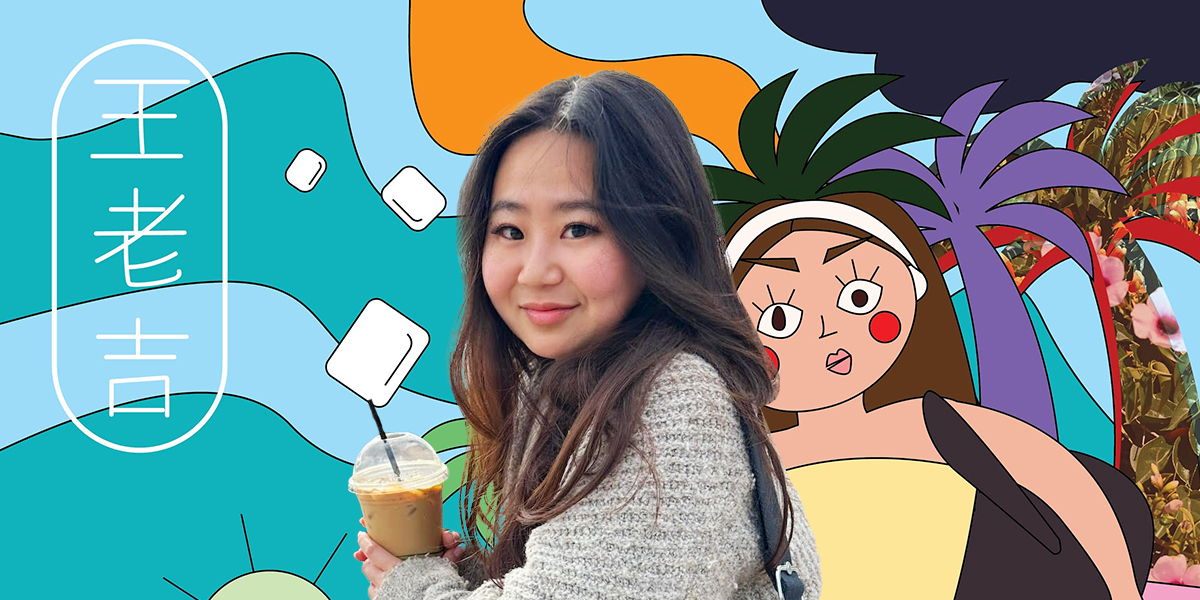
“I want to make a positive impact on children through design”
Minah Kim’s Student Journey in Australia at QUT
Minah Kim (25), currently majoring in Visual Communication at QUT, grew up experiencing diverse educational environments across Canada, Malaysia, and Australia. What started as a simple love for drawing has now grown into a dream of inspiring children through animation and design.
Q. When and why did you come to Australia?
A. The biggest reason was that I wanted to experience more. At 15, I first studied abroad in Canada. Living there, learning the language and culture, made me want to try life in another country. My parents worried a lot, but my father told me if I prepared and convinced them myself, they would allow it—and eventually both of them supported me. I lived in Canada until I was 21, but returned to Korea due to COVID. Later, I studied in Malaysia before transferring to QUT as a second-year student. To be honest, studying in Malaysia and Australia wasn’t part of the original plan—it was more of a spontaneous choice, but it turned out to be a great opportunity.
Q. What did you notice about studying in different countries?
A. The teaching styles were very different. In Malaysia, education still felt very structured and student-centered, even at university level, quite similar to Korea. But in Canada and Australia, the system was much more independent, with greater responsibility placed on the students. You have more freedom to choose, and you’re respected as an adult—which also comes with more accountability.
Q. Why do you think your parents always trusted you?
A. I was never particularly good at studying. I’d sometimes get scores as low as 40 in math, and English was the only subject I was a little stronger in. But my parents never scolded me harshly or pressured me because of grades. I didn’t even know report cards were being mailed home until I was an adult. They didn’t fixate on scores—instead, they believed, “One day, she’ll study when she’s ready.” They always spoke to me with respect and seriousness.
There was only one time my mother set a condition. Before studying in Canada, she told me, “Your grades reflect your attitude. If you can’t score at least 80 in math, we won’t send you abroad.” I worked hard and barely passed that mark, and because of it, I was able to go to Canada. But in the next test, I was back to 40 again (laughs). Still, my parents kept their promise and never lost faith in me. They always respected my decisions, even when it came to moving to a new country.
Q. Was early study abroad difficult for you?
A. My mother once told me that after I left, she often wanted to call but held back, afraid she would cry. My younger sibling saw that and became hesitant about going abroad themselves, and I still feel a little guilty about that.
Early study abroad definitely has downsides. Living in a homestay before fully forming your own identity creates challenges. When I returned to Korea, I sometimes clashed with my parents due to cultural differences. I often felt confused about my sense of belonging—wondering where I really fit in. But my parents would always remind me, “Don’t compare yourself to others. Just look at yourself.” Thanks to that, I’ve come to embrace it, and now I feel as though I’ve lived multiple lives in one, which is something I’m grateful for.
Q. Why did you choose design as your major?
A. I’ve loved drawing since I was a child, but I didn’t want it to stay just as a hobby. Naturally, I chose design, and I’ve never regretted that decision.
Q. Are you also working as a designer while studying?
A. Yes. My father has connections with a cultural heritage research institute, and through that I had the chance to join a government project. The project involves building a system to digitize and manage cultural data from different countries (currently Kyrgyzstan). My role is to create simple animations. It was my idea to “make it easier for kids to understand through animation,” and that’s been a great experience.
Q. Do you also work outside of design?
A. Yes, while my parents support part of my tuition, any money I earn through design or animation goes straight back to them. I also work part-time at Coorparoo Bistro in Brisbane, which is famous for its unlimited chicken menu and attracts many international customers. Personally, I highly recommend the spicy pork rice bowl!
Q. What’s special about studying design at QUT?
A. QUT gives students a lot of opportunities. Classes encourage group discussions and brainstorming, and above all, research is heavily emphasized. It’s not just about making things look nice—it’s about proving why a design is necessary with evidence, and solving problems from the user’s perspective. I’m learning that design is ultimately about problem-solving.
Q. Since both Canada and Australia are influenced by British culture, do you see any differences?
A. Even in language, there are differences. In Canada, people say “bathroom” or “washroom,” but in Australia, everyone just says “toilet.” In Canada, “toilet” only refers to the fixture itself, so it still feels strange to me. Also, Canada feels a little more formal, while Australia has a friendlier and more casual vibe.
Q. What goals do you have for the future?
A. After living in Australia, I’d like to spend some time in Kenya. I haven’t researched it deeply, but as I’ve always done, I believe I’ll be able to adapt to a new environment.
In terms of career, I don’t have a fixed goal like joining a particular company or starting my own business. More than anything, I want to use my skills to positively influence children. In middle school, one teacher told us, “The same pencil can be a weapon to some, but a tool for learning to others,” teaching us about different perspectives. That left a deep impression on me. So, I want to create designs and animations that bring positive experiences. One of my dreams is to take part in projects for organizations like World Vision or UNICEF.
Q. How do you spend your free time?
A. I attend St. Andrew’s Church in the city. It’s rooted in the Lutheran tradition, which might feel unfamiliar to Koreans, but it’s one of the largest church foundations in Australia. The community there is very warm and family-like, which helped me a lot when I was first settling in. Now, it feels like I’ve gained an extra family.
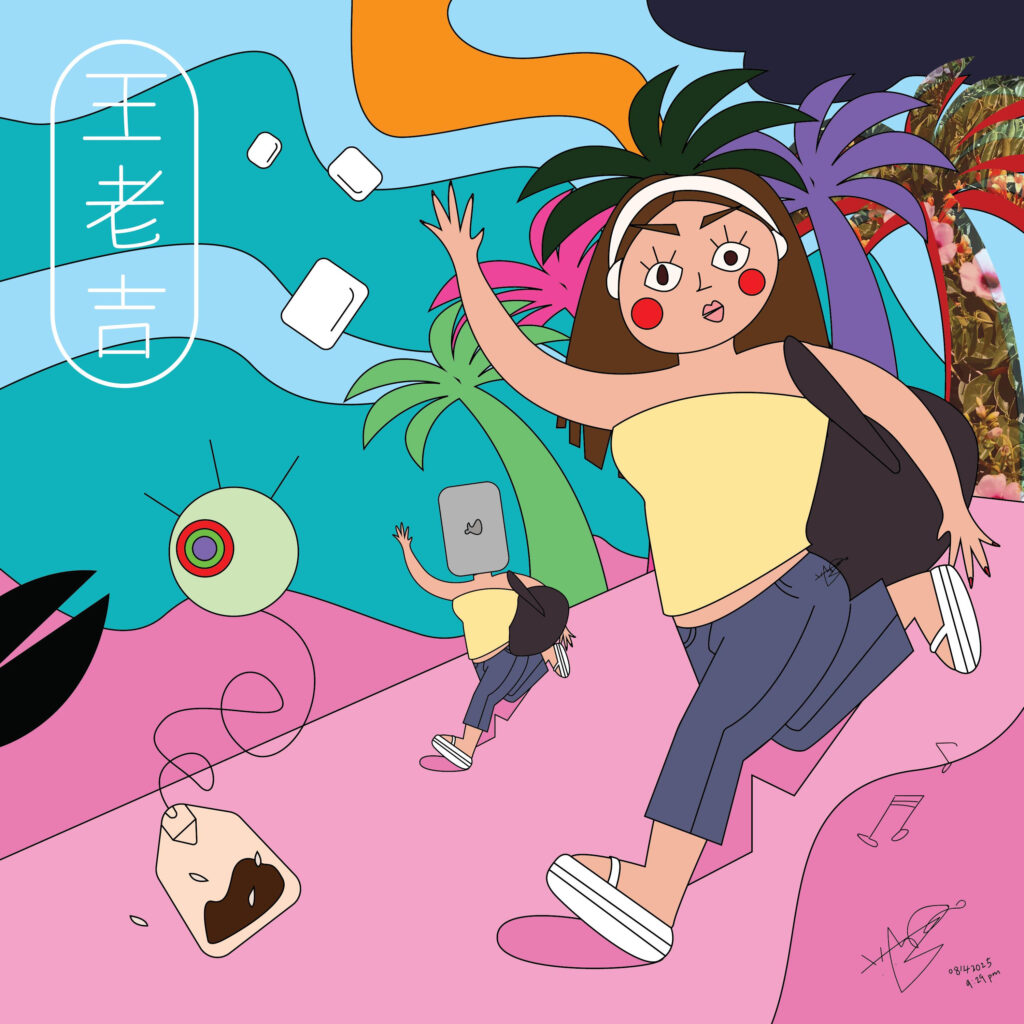
I also enjoy lying in the park or drawing. Since I’ve always loved art, I still find peace in sketching during my free time. I often share my finished drawings on Instagram.
instagram.com/minah_kim4618_illustrator
Q. What do you consider your personal strength?
A. I’m spontaneous but not afraid. I’ve always been able to adapt well to different environments. During my student years, there was a time I survived on instant noodles for three months because of financial struggles—but even that I took as an interesting experience. Rather than fearing new environments, I see them as opportunities to live another version of life. That mindset is my strength.
Q. What advice would you give to others preparing to study in Australia?
A. Realistically, English preparation is the most important. You don’t need to be perfect, but the more you prepare beforehand, the easier it will be. That said, don’t be too afraid—everyone learns by facing challenges directly. Balancing work and study is common here. While it’s difficult to earn all your tuition through part-time jobs, it’s possible to cover a good portion. Starting with a working holiday and then aiming for university can also be a good path.
Just as Minah Kim says, “Living in a new country is like living multiple lives.” From a girl who loved to draw, she has grown into a young designer dreaming of creating meaningful work for children—and her journey is only just beginning.

